CMO Simulator
A 10-minute interactive framework that walks you through CMO-level decision-making — budget allocation, channel strategy, KPI selection, and execution priority. The same logic I use with clients.
Launch the simulator below.
This is the actual tool — not a screenshot, not a video. Drop your name and email to unlock it and it opens right here in the page.
Most marketing conversations start in the wrong place. Teams jump straight to tactics — which channels, which ads, which content — before establishing the strategic logic that should be driving those decisions. The result is fragmented execution, wasted budget, and no clear story for what's working and why.
CMO-level thinking is a specific skill. It's the ability to see budget allocation, channel strategy, KPI selection, and execution priority as an integrated system — where each decision informs the others. Most marketers never get exposure to that kind of structured decision-making unless they've worked directly with a senior strategist.
I built the CMO Simulator to make that framework self-serve. The same logic I use when I onboard a new client — the questions I ask, the tradeoffs I surface, the prioritization decisions — packaged as an interactive tool you can run yourself in about 10 minutes.
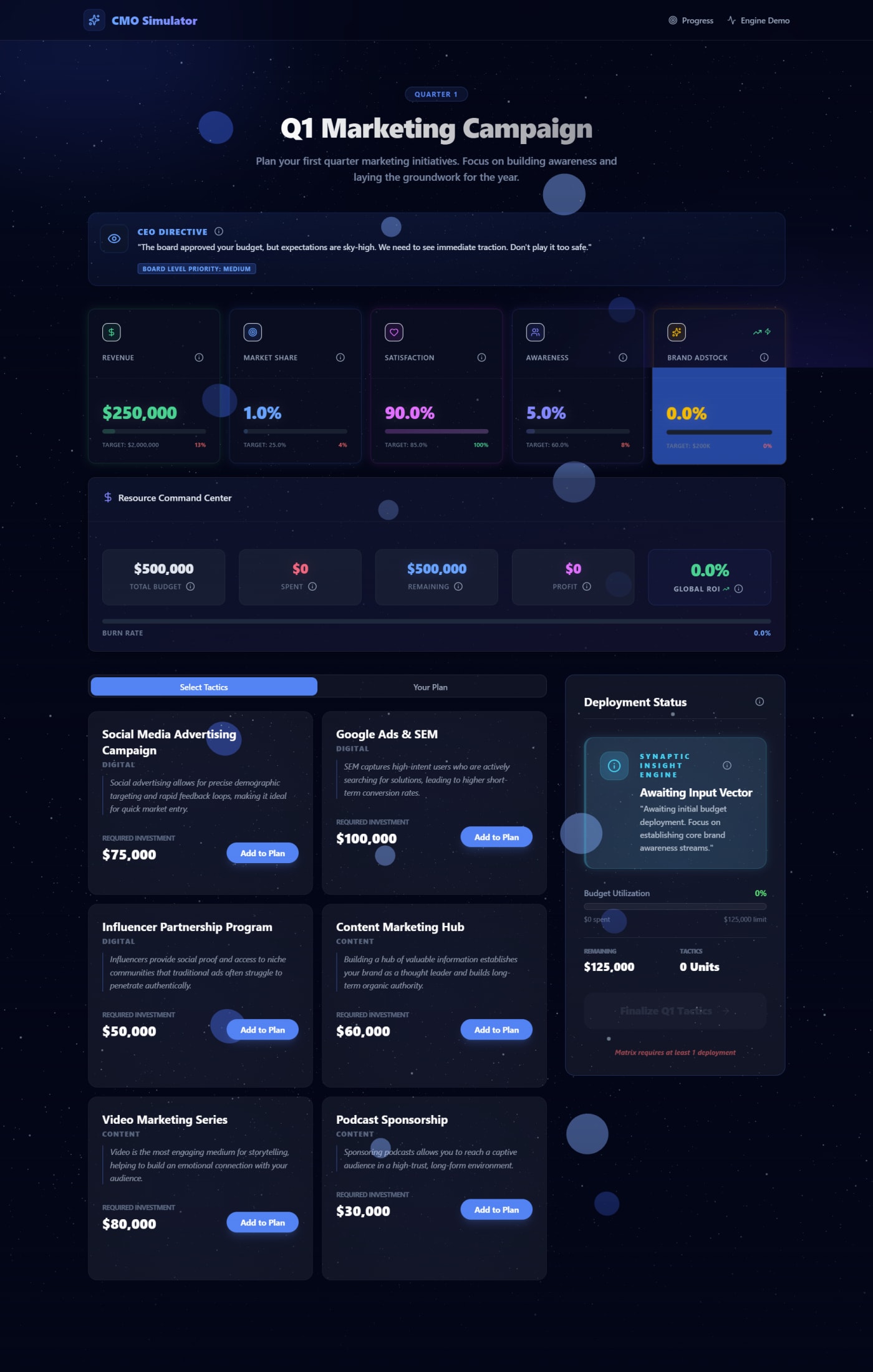
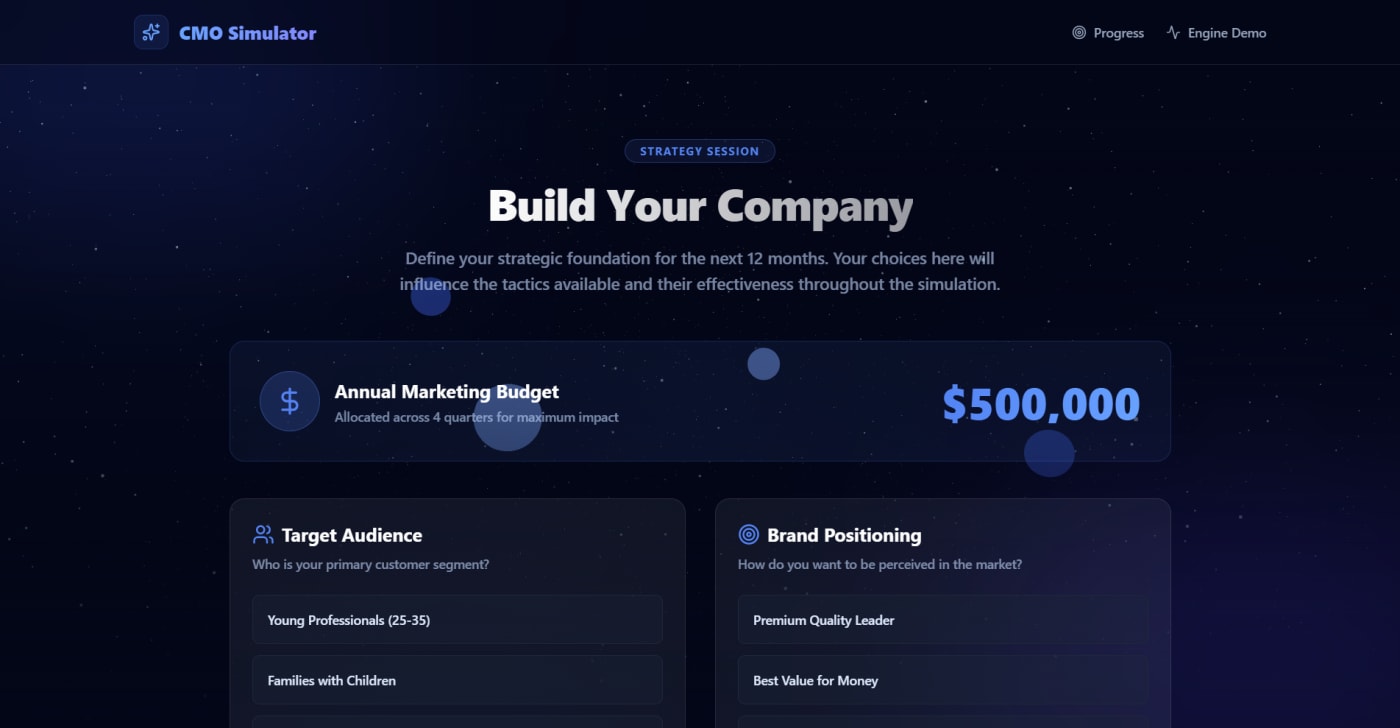
The CMO Simulator is structured as a guided decision-making session. The user moves through a series of framing questions — about their organization's goals, their current marketing reality, their budget constraints, and their execution capacity — and at each step, the tool responds with the strategic logic that a CMO would apply.
The experience is less “quiz” and more “thinking partner.” The goal isn't to give you a score. It's to walk you through the exact sequence of questions a senior marketer asks before touching tactics. Budget before channels. Channels before content. Measurement before execution.
The access gate is intentionally light. Name and email — that's it. No sales sequence follows. I use the data to understand who's engaging with the tool and to reach out personally if someone's situation looks like a fit for working together. The simulator does the qualifying; I do the conversation.
The CMO Simulator serves two purposes. For potential clients, it demonstrates the kind of thinking they'd get working with me — before they have to commit to a conversation. It builds credibility in a way a case study can't: you experience the framework instead of reading about it.
For me, it's a qualification mechanism. Someone who takes 10 minutes to work through a CMO-level decision framework has already demonstrated the kind of strategic mindset that makes for a good client engagement. By the time they reach out, we're already aligned on how to think about marketing problems.
That the best sales tool is a demonstration of how you think — and that a free interactive framework can qualify clients better than any discovery call script.
Ready to think through your marketing strategy with someone who's done this for 15 years?
Let's talk← Back to all builds