SaaS / Healthcare Training · Marketing Automation · Platform Engineering
Graston Technique®
Graston Technique® is a clinically validated soft-tissue treatment method used by physical therapists, chiropractors, athletic trainers, and a dozen other licensed pro...
The throughline across every system I built for Graston was the same: eliminate the manual handoff. Signal: +212% qualified leads

+212% qualified
leads
95% overhead
reduction
48 hrs/wk
saved
This build supports Fractional CMO & Embedded Marketing Leadership
Why this mattered
Graston Technique® is a clinically validated soft-tissue treatment method used by physical therapists, chiropractors, athletic trainers, and a dozen other licensed professions. The certification program is rigorous. The practitioner network is large and distributed. And the infrastructure holding it together was anything but.
Every new training registration triggered a chain of manual steps across four disconnected systems. Data didn't sync. CRM records were incomplete. Certificate issuance required staff intervention. The provider directory — a high-value patient acquisition tool — was essentially a passive listing with no automated onboarding and no lifecycle communication.
Attribution was broken across multiple dashboards. And the site itself was intermittently slow, unstable under peak traffic, and vulnerable to 85,000+ bad-bot requests per month.
This wasn't one project. It was a platform that needed to be rebuilt from the infrastructure up.
What changed
The systems behind the results
Acquisition and conversion systems
Provider directory: from passive listing to conversion engine
The provider directory was Graston's highest-leverage patient acquisition surface — and it was doing almost nothing. Clinicians who completed training weren't being guided into their directory listing. The three membership tiers (Premier at $299/year, Preferred at $199/year, and a free 60-day Premier trial provisioned automatically on course completion) had no automated onboarding. Most practitioners who qualified never activated.
I redesigned the entire post-completion flow. Course completion in LearnDash now triggers automatic profile creation, activates the 60-day Premier trial, and fires a structured email sequence: welcome on day 0, profile completion nudges through day 21, a mid-trial ROI preview on day 30, a practitioner success story on day 45, and renewal urgency from day 53 through 60. Zero staff involvement at any step. For existing practitioners — thousands of alumni who had never been invited into the directory — I structured a controlled rollout at 200 invitations per week, managing both deliverability and the moderation queue. Qualified leads grew 212%. Directory conversion lifted 40%.

Training lifecycle and certification
Every training registration used to trigger four manual steps across disconnected systems. Staff reconciled data. Certificates got issued by hand. Enrollment confirmations went out late or not at all.
I automated the complete journey. A WooCommerce purchase triggers LearnDash enrollment. Course completion fires a Gravity Forms evaluation. Results are logged, WP Fusion tags the CRM record, and the certificate is generated and delivered automatically. 95% of the manual overhead — 48 hours per week — was eliminated without adding headcount.

Retention, visibility, and operating intelligence
CRM, operational visibility, and internal tooling
Four disconnected systems meant four sources of record with no reconciliation layer. CRM data was incomplete. Segmentation campaigns were guesswork. When an instructor needed to know whether an event had enough enrollments to avoid cancellation, they'd spend hours pulling numbers manually from three different places.
I built a unified data pipeline connecting WooCommerce, LearnDash, Gravity Forms, and FluentCRM, then surfaced that data through two internal tools. The admin command center aggregates orders, enrollment progress, evaluations, and CRM tags in a single tabbed view — with enrollment velocity indicators that flag low-enrollment events before they reach a cancellation threshold. A separate instructor dashboard adds event-type filtering and surfaces instrument model data pulled from FluentCRM contact records, supporting personalized follow-up and training outreach. Dunning automation handles payment failures through a staged recovery sequence before any downgrade fires. Renewal reminders go out at 30 and 7 days automatically.

Measurement, attribution, and Google Ads optimization
Attribution was fragmented across multiple dashboards with inconsistent UTM tagging and client-side tracking that ad blockers severed routinely. The practical result: marketing decisions were made on data that was 20–40% incomplete. Nobody could confidently say which campaigns were driving training sales.
I rebuilt the measurement layer from scratch. Server-side event collection via Cloudflare Workers bypassed ad blockers entirely. Gravity Forms submissions were pushed to the GTM dataLayer as qualified lead events — with form-ID filtering so only marketing-qualified completions triggered Google Ads lead conversions. WooCommerce purchase events were reconfigured as primary conversion actions in Google Ads for smart bidding, so the algorithm optimized for actual sales, not proxy signals. All signals were unified in BigQuery and Looker Studio with annotated dashboards. Attribution went from unreliable to trusted. ROAS improved because the data was finally accurate enough to act on.
Provider-facing analytics: building the retention case
A directory membership only renews if providers believe it's working. Without visibility into their own performance data, even a directory that's genuinely driving patient traffic looks like a sunk cost at renewal time.
I built a provider-facing analytics pipeline that gives each member their own numbers: profile views, website clicks, phone clicks, form submissions, scroll depth, top referral sources, and a peer benchmark chart showing how their listing compares to the directory average. GA4 events are proxied through Cloudflare Workers into provider-specific ACF fields — then pulled into FluentCRM for personalized monthly delivery. Every Premier member gets an automated ROI email with their data each month. Providers can see exactly what their membership is doing for them, which changes the renewal conversation from "I hope this is worth it" to "here's the math."
Platform stability and infrastructure
Infrastructure, security, and edge architecture
The platform had three compounding problems: 85,000+ bad-bot requests hitting the origin server monthly, PHP handler instability causing intermittent 500 errors under peak traffic, and a directory search experience slow enough to drive patient bounce before a provider was found.
I rebuilt the platform layer by layer. The directory runs as a headless experience — React frontend on Cloudflare Pages, with Cloudflare Workers acting as the secure API layer between the public interface and the WordPress origin. The origin is never exposed directly; all provider search, filtering, and analytics proxying runs at the edge. Cloudflare WAF with WordPress-specific rules neutralized the bot traffic. Authenticated Origin Pulls (mTLS) ensured only Cloudflare could reach the origin server. Brotli compression and a structured caching strategy reduced payload 20–30% and pushed the CDN Tiered Cache hit ratio to 86%. Server CPU load dropped 40%. The platform went from fragile under load to stable enough to instrument with real-time monitoring — CPU, memory, and I/O alerts so problems surface before users notice them.
How the platform was rebuilt
What sat underneath the visible work
This was not a marketing campaign or a website refresh. It was a full platform rebuild across six operational layers: a membership directory with automated onboarding, automated training and certification, a unified CRM and internal command center, a complete measurement layer from GTM to BigQuery, provider-facing analytics dashboards, and a hardened edge infrastructure. Each layer was built to work without manual intervention. Each one feeds into the next. That's why the overhead dropped 95% and the leads grew 212% — not because of a tactic, but because the whole system was designed to run itself.
Supporting evidence
Interface surfaces, campaign creative, and product documentation from the engagement.
Website and platform screens


Campaign creative


Product and precision

Supporting brand and campaign proof
Supporting brand and campaign material from the engagement
Graston Technique
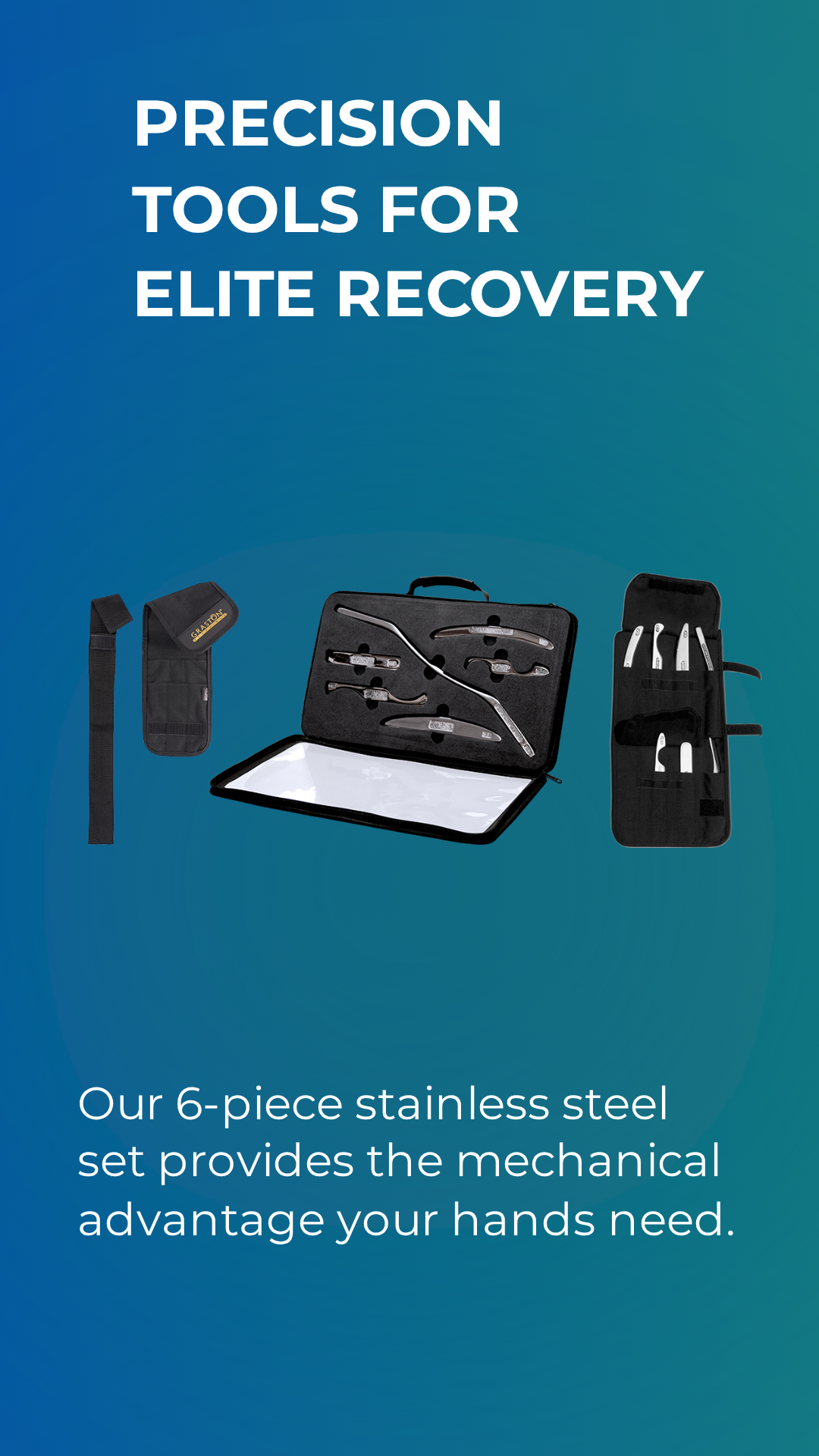
Visit brand siteGraston Technique is a specialized provider of evidence-based Instrument-Assisted Soft Tissue Mobilization (IASTM) therapy — delivering medical-grade stainless-steel instruments, clinician training, and continuing education programs to physical therapists, chiropractors, and allied health professionals.
Values
Aesthetic direction
Voice
Fonts
Campaign hooks


Results and operating impact
Qualified leads grew 212%. Directory conversion lifted 40%. Administrative overhead dropped 95% — 48 hours per week returned to the team. Attribution went from incomplete to trusted. Google Ads started optimizing for actual sales. The platform stopped breaking under load.
But the most important outcome was structural. Graston Technique® stopped being an organization held together by manual processes and started operating as a platform. Every clinician enrolled, every certificate issued, every directory profile activated, every renewal reminded, every provider ROI email delivered — handled automatically, accurately, at scale.
What this proves
This engagement is the clearest proof of what I do: strategic diagnosis of a fragmented operation, followed by a purpose-built system that makes the whole thing run without constant management. Not a campaign. Not a refresh. A platform rebuilt to be self-sustaining — with the measurement layer, the retention mechanics, and the edge infrastructure to stay that way. That's what fractional CMO-level leadership looks like when it's paired with someone who can actually build the thing.
This build supports Fractional CMO & Embedded Marketing Leadership
Try the framework
Run CMO Simulator on your version.
Run the same CMO-level decision framework that shaped this engagement architecture.
Ready to turn your platform into something that runs itself?
Let's talk about what that looks like.