reduction in manual overhead at Graston Technique after the full CRM and automation stack
CRM Architecture
CRM Architecture & Marketing Systems
Having a CRM is not the same as having a system you can actually run from.
Most CRM problems are not software problems. They are architecture problems. The CRM is live, but no one fully trusts it. Pipeline stages mean different things to different people. Follow-up is too manual, reporting is hard to act on, and ownership between marketing and sales is unclear. The underlying issue is usually structure — lifecycle design, routing logic, ownership rules, and visibility — not which platform the business is using. I design the CRM layer that connects marketing, sales, and operations so leads move reliably, follow-up happens consistently, and the business can actually see what is working.
Typical investment$4K–$30K+ · Scoped by stack size and integration depth
Diagnose before engagement
Try Attribution Snapshot first.
Validate model spread and reporting confidence before CRM changes.

Audit snapshot
automations built and deployed across production marketing and sales systems
saved at Graston Technique after the automation layer was deployed
Signs you need this
- No one fully trusts the CRM as the source of truth.
- Pipeline stages are inconsistent or mean different things to different people.
- Leads are being followed up manually or falling through the cracks.
- Reporting exists, but it is hard to turn it into decisions.
- Ownership and handoff between marketing and sales feel messy.
- Duplicate records, missing data, or workarounds are becoming normal.
- The CRM feels like software you have, not a system you can run from.
What this usually includes
- CRM architecture audit — identify where the current setup breaks trust, speed, or visibility.
- Lifecycle and pipeline design — define stages, ownership, and movement clearly.
- Lead-routing and handoff rules — make follow-up more consistent and easier to run.
- Field and property cleanup — simplify data structure so reporting and automation become more usable.
- Automation logic direction — identify what should happen automatically and what still needs human judgment.
- Dashboard and visibility guidance — make the CRM easier to manage by, not just store data in.
Common questions
Related proof
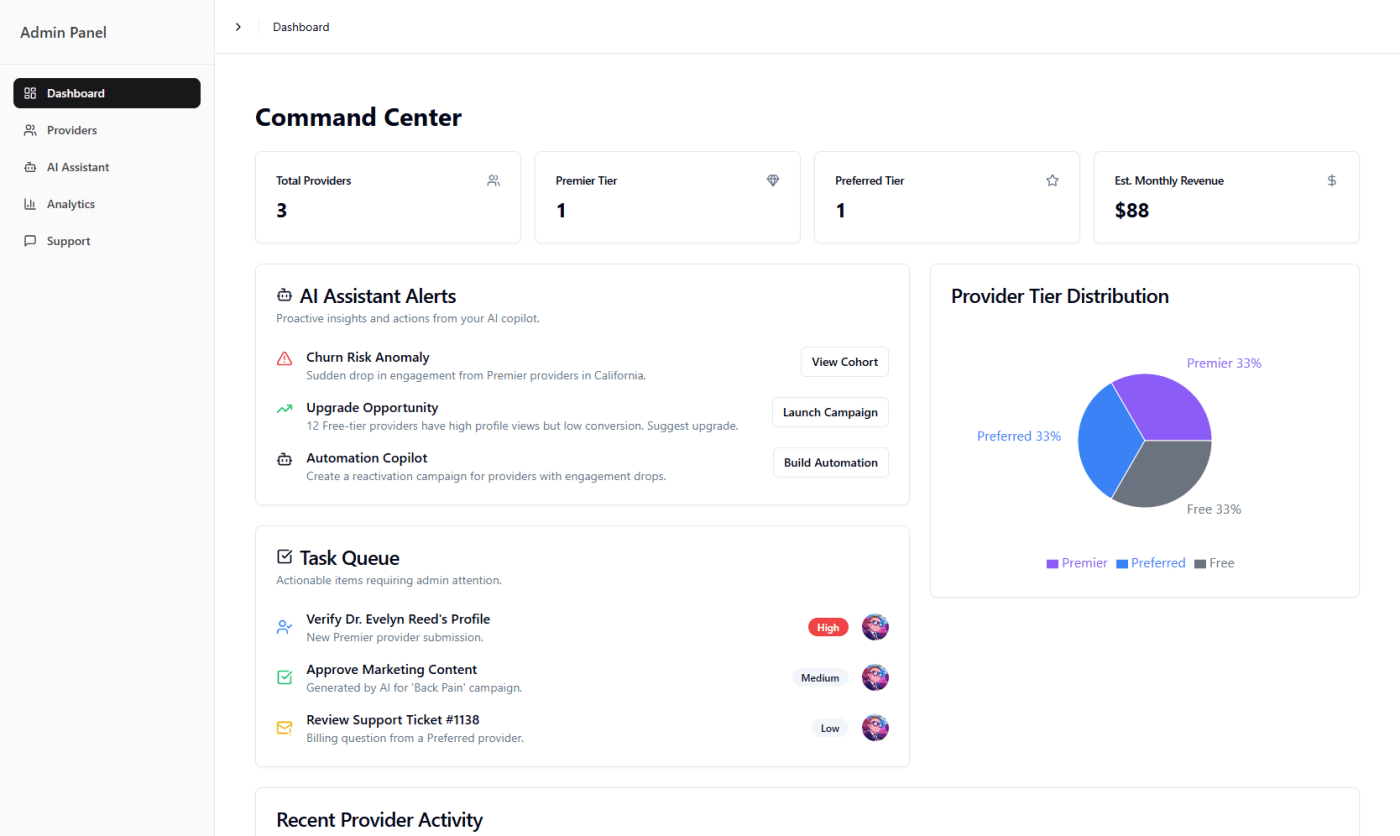
Live build
See the Graston Growth Engine in action.
A two-sided provider directory with real-time spatial search, AI-powered support automation, and a per-provider analytics dashboard — built as a production system, not a demo.
Related case studies
Related services
CRM & AutomationLead Gen WorkflowsAgentic SystemsHealthcareSaaSE-CommerceB2B
Ready to get started?
I work with a small number of clients at a time. Every engagement gets my full attention.